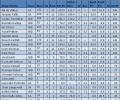
Captain Mahendra Singh Dhoni is still India's MVP of the current 2009-10 season, but Tendulkar has come dangerously close. The master batsman would almost certainly have topped if he had played as many matches as Dhoni.
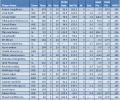
Kumar Sangakkara edged out Virat Kohli to take the top place in the just-concluded tri-series.
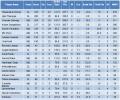
Sri Lanka's Tillakaratne Dilshan ended his most successful year in international cricket by becoming the most valuable player (MVP) in the recently-concluded India Sri Lanka ODI series, with his fellow-opener Upul Tharanga just behind him.

Mahendra Singh Dhoni is so far the most valuable player (MVP) in the ongoing India-Australia seven-match One-Day International series, with Michael Hussey just behind him.

What a remarkable comeback by Ashish Nehra. After being almost forgotten, the left-arm pacer now leads India's Most Valuable Player (MVP) rankings in One-Day Internationals this season.

Even though Yuvraj Singh didn't seem to be quite himself -- at least till that innings in the Compaq Cup tri-series final -- he is still India's most valuable ODI player in the ongoing 2009-10 season. If Yuvraj doesn't bat well, he ends up bowling rather well. So this way or that he always brings great value.
Although the Indian captain M S Dhoni performs well in all three forms of cricket, he seems best equipped to play ODI cricket. In ODI cricket, a strike rate just below 100 which is the rate Dhoni is now most comfortable with is considered excellent. Also the 50 overs allow the calm captain sufficient leverage to swing close matches his team's way.
It's not clear if the India-New Zealand One-Day International series offered a man of the series award. But there can be no doubt that the overwhelming favourite for the award was Virender Sehwag. Sehwag plundered almost 300 runs, at a staggering strike rate of 150, to be right at the top of the list of the most valuable players (MVP) of the series.
Yuvraj Singh was the most valuable player (MVP) in the recently-concluded Sri Lanka India ODI series, but Virender Sehwag continues to be India's most valuable ODI player so far in the 2008-09 season.
The MVPI is calculated based on the assumption that, in ODI cricket, batsmen offer the best value if they score a lot of runs with good strike rates, bowlers if they take a lot of wickets at good (low) economy rates, and fielders if they take the most catches or make the most run outs. The MVPI collapses the player's all-round performance into a single 'run equivalent'.
Virender Sehwag tops the list with a MVPI of 1133; this contribution is even more noteworthy because he has played in only 12 of the 18 ODI matches played so far this season.
After winning the International Cricket Council's ODI Player of the Year 2008 award, it is not such a big surprise that Mahendra Singh Dhoni is also India's most valuable ODI player so far in the 2008-09 season.
After nine one-dayers of the current 2008-09 season, the dashing opener is India's most valuable player (MVP) by a long mile.
Pakistan all-rounder Shahid Afridi and India's opener Gautam Gambhir proved to be the two most valuable players in the recently-concluded tri-series in Bangladesh.
The IPL league games threw up many surprises. Very few expected Rajasthan Royals to be the best team (and now a finalist); nobody expected the Deccan Chargers to do so badly. We'll discuss each team's performance, and identify the five best and three most disappointing players. While doing so we shall italicize what appear to be key pointers.
PVI and MVPI after the IPL league matches.
It's interesting to look back at the IPL player auction in February 2008 and see if there are some lessons to learn from an event that shook the cricketing fraternity. These are random thoughts, and appearing in a random order, but influenced by our paisa vasool analysis.
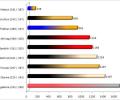
It is curious that while 'low cost' medium and fast bowlers have performed almost as well as their 'auctioned' counterparts, 'low cost' batsmen have been unable to match the performance of their more successful seniors

After the first week of the DLF IPL, the Australians appeared to be dominating. From the second week onwards, especially after Matthew Hayden, Michael Hussey, Brett Lee and Andrew Symonds left, the Indians seemed to be gaining ascendancy with fine performances from Virender Sehwag, Gautam Gambhir, Rohit Sharma, the Pathan brothers and M S Dhoni.
The T20 is often described as a young man's game; if you cross 30 you are supposed to be too old Is this hypothesis true? Is younger indeed better?
 © 2026 Rediff.com - Advertise with us - Disclaimer - Privacy Policy - Sitemap - Feedback - About us - Terms of use - Grievances